

This is an abridged article based on a larger insight. If you'd like to learn more, read Drainage, CP7 & the implications for rail safety
With £45 billion of Network Rail investment committed during CP7, drainage is no longer viewed as a supporting asset. It has become a critical part of improving network resilience, protecting earthworks and ensuring safe, reliable railway operations.
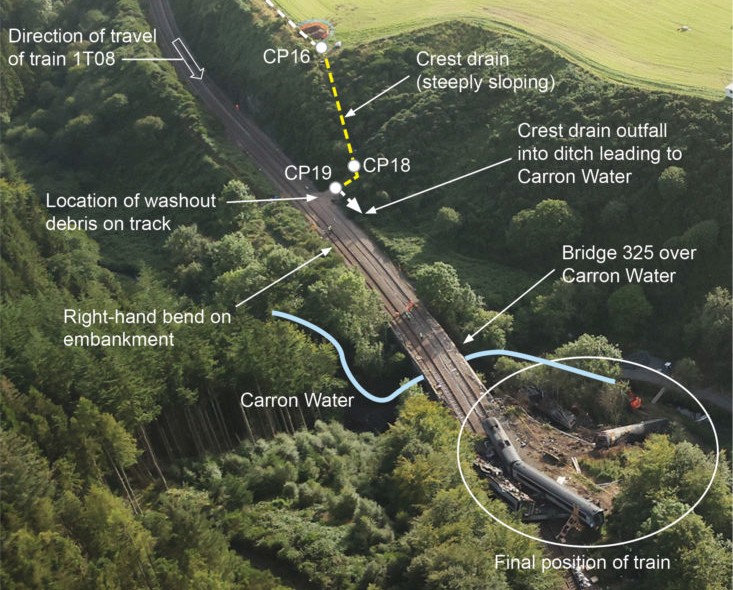
The Carmont derailment served as a stark reminder of the consequences of inadequate water management. As increasingly extreme weather places greater pressure on rail infrastructure, engineers are being challenged to specify drainage solutions that not only meet today's performance requirements, but continue to deliver throughout the asset's design life.
At the same time, changes to product approval processes have given designers greater flexibility to specify systems based on proven technical performance, allowing innovation and sustainability to play a greater role in project delivery.
Source: Railstaff.co.uk | Investigators found that poor drainage oversight, inadequate inspections and insufficient use of weather and flood risk data contributed to the incident, highlighting the growing importance of resilient drainage as extreme rainfall events become more frequent. Source: COPFS |
Delivering drainage solutions for CP7…
Network Rail responded to Carmont by strengthening its approach to drainage management, while changes to product approval processes now give engineers greater freedom to specify solutions based on technical performance rather than a limited list of approved products. This shift is encouraging more resilient, future-proofed designs capable of withstanding increasingly frequent severe weather events.
For manufacturers and merchants, it also creates an opportunity to provide informed specification guidance, drawing on proven drainage and water management solutions already delivering reliable performance across sectors such as highways and major infrastructure.
At Naylor, we believe this renewed focus on drainage, combined with performance-led specification, will help deliver safer, more resilient rail infrastructure throughout CP7 and beyond.